
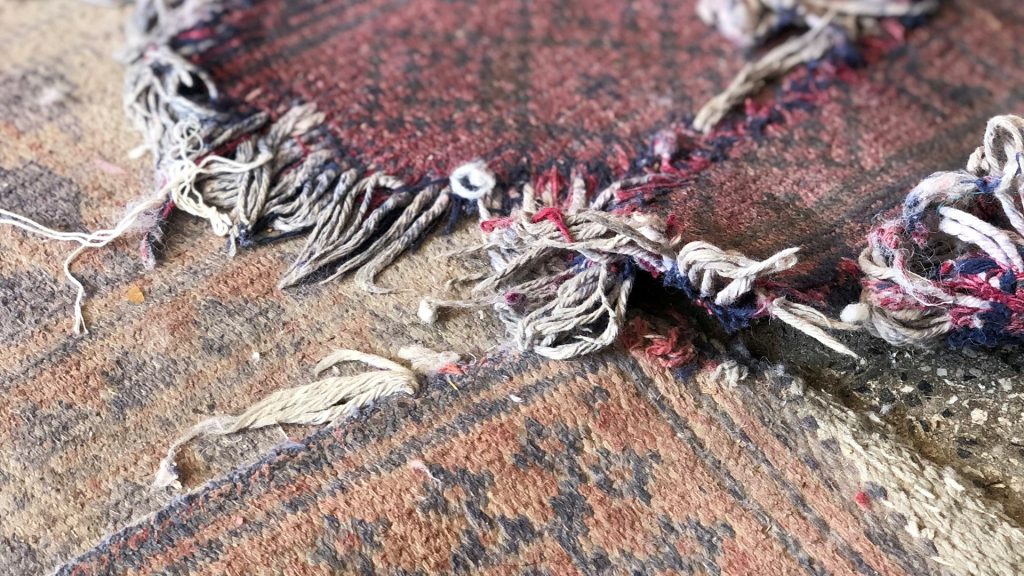
Zilou is one of the oldest woven crafts in Iran, often seen as a refined evolution of mat weaving. These reversible rugs are made entirely from cotton yarn, blending geometric patterns in simple white and blue hues. The coolness of cotton, the spirituality of blue, and the clarity of the designs gave zilou a unique status among the people of Iran’s dry regions, making it worthy of worship places. But what happened to this revered craft? In this article, we explore the history and journey of zilou, a neglected art teetering on the edge of oblivion.
Zilou in Historical Texts
A review of early Islamic texts in Iran reveals that zilou weaving was thriving at the time. One of the earliest historical records of zilou is found in the book “Hudud al-‘Alam”, written in 372 AH, which mentions zilou weaving workshops in Iran. Similarly, in “The Travelogue of Nasir Khusraw”, written in 481 AH, the abundance of zilou workshops in Iran is noted.
Researchers believe the origins of zilou and its complex weaving techniques date back even further, with its history potentially stretching over 1,100 years. This theory is plausible, given the advancements and widespread fame this craft gained during the Islamic centuries.
Notable Historical Pieces of Zilou
Among the oldest available examples of zilou is a piece from Nushabad, woven by Master Ali Nushabadi in the first half of the 8th century AH, now housed in the Hermitage Museum in Russia.
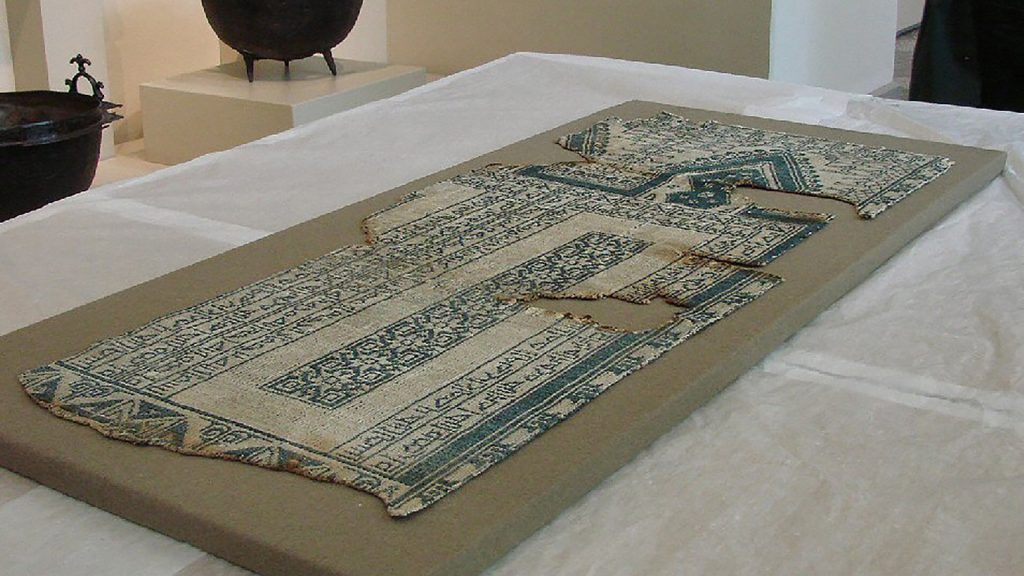
Other notable examples include the zilous of the Khanqah of Bidakhwiyd, bearing inscriptions from 927 and 930 AH. Additionally, a piece from the Shah Vali Mosque in Taft, inscribed in 963 AH, is held at the Islamic Museum of Cairo.
Another significant example is the zilou from the Jameh Mosque of Meybod, considered by some to be the oldest surviving piece, although its date is contested—some interpret it as 808 AH, while others see it as 1188 AH. Many more priceless and historic zilous can be found, with some collected at the Zilou Museum of Yazd, located in the Shah Abbasi Caravanserai in Meybod.
Zilou in Sacred Spaces
In those days, although zilou was used in homes, its most frequent application was in sacred spaces like mosques, takiyas (religious gathering spaces), and khanqahs (Sufi lodges). The meaningful simplicity of this woven art, characterized by minimalist patterns and a restrained color palette, along with the coolness of cotton, made zilous an ideal choice for spiritual environments, especially in arid regions.
These pieces were adorned with geometric patterns inspired by brickwork and tilework and were woven from pure cotton dyed in indigo. Zilous embody minimalism and simplicity, harmonizing well with the spiritual atmosphere of Iranian mosques, where they aligned beautifully with the blue tiles and brick designs. This artistic harmony reflects a profound spiritual connection between woven crafts, architecture, and the unified artistic vision of the era.
Inscriptions on Zilou
A standout feature of zilous, due to their use in religious sites, is the presence of historical inscriptions. These often included the date of the endowment, the benefactor’s name, the weaver’s name, and the terms of the endowment, all written in Naskh or Kufic script. These inscriptions not only served as design elements but also transformed the zilous into historical documents, providing valuable insights into society and its time.
For instance, in his book “Yadgarhaye Yazd” (The Heritage of Yazd), published in 1969, Iraj Afshar mentions a zilou found in the Jameh Mosque of Meybod, dated to 808 AH (or perhaps 1188 AH). He writes, “An old endowment zilou is spread in the courtyard of the grand iwan, measuring 7.40 by 3.14 meters, with a design of 24 prayer niches woven into it, and an inscription that reads:
“This zilou was lawfully endowed by the esteemed Haj al-Haramain al-Sharifain, Haji Abdul Rashid, son of Abdul Ali Meybodi, for use under the dome of the mentioned Jameh Mosque. It should not be taken out except to the mosque’s prayer hall. Written in Rabi’ al-Thani, 808 AH, woven by Master Ali Bidek, son of Haji Meybodi.”
This historical zilou is now housed in the Zilou Museum of Yazd, Iran.
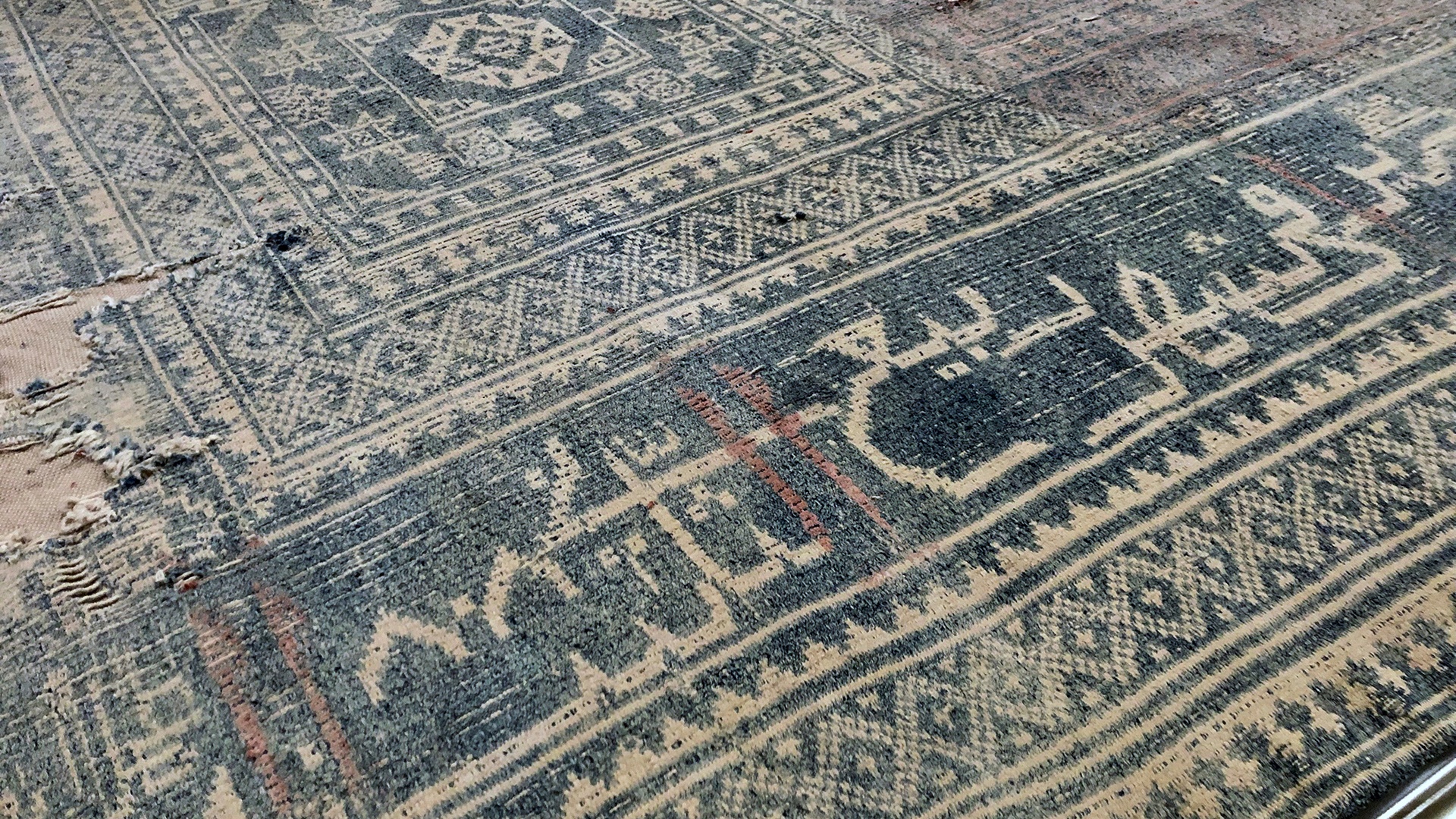
It’s worth noting that since the patterns on zilous are created by shifting the warps, inscribing on them is a mentally challenging task requiring specific calculations. Although zilou may appear to be a simple cotton rug, examining its weaving techniques reveals a rich culture and complex craftsmanship hidden beneath the surface.
The Rise, Fall, and Renewal of Zilou
As we have seen, zilous were once revered and graced the courtyards of sacred sites, holding a special place among the people of the desert. However, with the advent of industry and modernity, zilou, like many other handicrafts, lost its prominence. Yet, despite the upheavals of time, zilou endured, and its complex weaving methods were passed down through generations.
Over time, in a struggle for survival, zilous adopted new colors beyond traditional whites and blues, while the inscriptions that once played an important role in this art became limited or disappeared entirely. In spite of these changes, zilou never regained its former status and nearly faded into oblivion.
It’s surprising that despite its rich history and independent cultural identity, zilou—an Iranian woven art that is minimalist, plant-based, and inscribed—remained largely overlooked by researchers and collectors in both the East and West. For example, it’s said that during the restoration of Shah Nematollah Vali’s shrine in Mahan, Kerman, the shrine’s priceless zilous were discarded with construction debris.
Fortunately, in recent years, our friends in Yazd have refused to accept such a tragic fate for zilou and have worked diligently to restore it to its rightful place. Rounas, too, has taken steps in this direction by producing contemporary zilous while preserving their authenticity.
Let us all work together to keep this beautiful craft safe from oblivion, honoring the humble, artistic ancestors who created it. Explore our GALLERY and discover how we’ve merged the timeless art of zilou with modern design to bring a unique touch to your home.
In this writing, we have drawn upon the insights of the following scholars:
– Iraj Afshar in *The Heritage of Yazd*, 1995
– Javad Alimohammadi Ardekani in *A Study of Zilou of Yazd*, 2007
– Mohammad Reza Ghiassian and Mohammad Mashhadi Nushabadi in the article *The Zilou of Nushabad*, 2021″